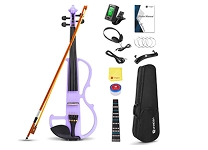
Explore Acoustic, Electric, and Practice Violins
Violins are bowed string instruments used in classical orchestras, chamber music, folk traditions, jazz, and contemporary performance. Acoustic violins produce sound through a hollow body, while electric violins use pickups to send their signal to an amplifier or recording setup. Silent or practice models are designed for quieter playing, often with a compact or solid body and headphone connectivity. Student, intermediate, and professional instruments differ in construction, setup, responsiveness, and intended playing demands rather than simply in appearance. Full-size and fractional-size options help match an instrument to the player's reach and stage of learning. When browsing violins on Ubuy, compare instrument type, included accessories, and intended use so the choice suits lessons, home practice, ensemble playing, or performance.
- Acoustic, electric, and quieter practice options
- Models for students through advanced players
- Suitable for lessons, ensembles, and performance
Understand Violin Materials and Construction
A violin's materials and setup influence its feel, durability, and tone. Traditional acoustic models commonly use a spruce top with maple back and sides, while the neck is often maple and the fingerboard may be ebony or another suitable hardwood. Bridges, tailpieces, tuning pegs, and fine tuners affect how the instrument is adjusted and played. Strings may use steel, synthetic, or gut cores, each offering a different response and playing feel. The soundpost and bridge need careful positioning, so professional setup can matter as much as the instrument's listed materials. Finishes range from simple protective coatings to more detailed varnish work. For electric violins, body design, pickup type, output connections, and controls are additional construction details to compare.
- Spruce and maple are common acoustic tonewoods
- String cores affect feel and response
- Setup influences tuning and playability
Choose a Violin Size and Comfortable Fit
The right violin size allows a player to hold the instrument securely and reach the notes without undue strain. Full-size, or 4/4, instruments are generally used by adults and players with sufficient reach; smaller fractional sizes, such as 3/4, 1/2, and 1/4, are commonly considered for younger or smaller players. Age alone is not a reliable sizing measure, so a teacher or knowledgeable music retailer can help assess arm length, hand reach, and posture. Comfort also depends on the neck profile, chinrest, shoulder rest, and instrument weight. A well-fitting setup supports relaxed bowing and accurate fingering during practice. Ubuy can help shoppers discover violins and related accessories from international product selections, making it useful to review size details and included components before choosing.
- Consider reach and posture, not age alone
- Fractional sizes support smaller players
- Chinrests and shoulder rests affect comfort
Compare Strings, Bows, and Violin Accessories
A complete violin setup may include a bow, rosin, case, shoulder rest, and replacement strings, but package contents vary. The bow's stick material, balance, and frog design affect handling; horsehair is common, while synthetic hair is also available. Rosin helps the bow grip the strings, and a protective case helps store and transport the instrument. Shoulder rests and chinrests come in different shapes and adjustment ranges, so comfort and fit are personal considerations. Beginners may value a tuner, spare strings, and a music stand, while electric players may need a compatible cable, headphones, amplifier, or audio interface. Check whether accessories are included and whether they suit the violin's size and setup. Ubuy listings can be compared by examining specifications, package descriptions, and compatibility information.
- Check what each instrument package includes
- Match accessories to violin size and setup
- Electric models may need audio equipment
Match Violin Features to Your Playing Needs
The best features depend on where and how the violin will be played. A student instrument should be comfortable, properly sized, and set up for dependable tuning and bow response. Players developing technique may prioritize a responsive instrument, quality strings, and adjustable fine tuners. Advanced musicians often compare tonal character, projection, craftsmanship, and the instrument's response across its range. Acoustic violins suit unamplified playing and traditional ensembles, while electric models offer signal output for amplification, effects, or recording. Practice-focused designs can be useful when quieter sessions are important, though headphone and connection options differ by model. Brands such as Yamaha, Stentor, Eastman, and Cremona offer products across various playing needs and price levels. Compare specifications rather than relying on brand name alone, and consider advice from a teacher or experienced player.
- Prioritize setup and comfort for learning
- Compare response, projection, and intended use
- Review specifications across brands
Select the Right violins
Before choosing, identify the player's size, experience, budget, and main use, then compare acoustic, electric, or practice instruments accordingly. Review the listed dimensions, materials, string type, tuning hardware, and package contents; confirm that the bow and case fit the instrument if included. For a first violin, a dependable setup and comfortable fit are often more useful than decorative details. More experienced players can weigh response, tonal character, projection, and opportunities for adjustment. Check whether a model's output connections work with intended audio equipment, and account for useful extras such as rosin, a shoulder rest, tuner, and spare strings. Ubuy provides a place to discover international violin products and compare available product information. Read each listing carefully and seek knowledgeable guidance when sizing or setup details are uncertain.
- Start with size, experience, and intended use
- Verify specifications and included accessories
- Seek setup guidance when needed