Learning Educational Toys for Play-Based Discovery
Learning educational toys bring hands-on exploration into everyday play, helping children practise skills while building, sorting, imagining, and solving problems. The category spans puzzles, construction sets, shape sorters, pretend-play kits, science activities, art supplies, and early learning games. Different designs encourage different kinds of engagement: a stacking toy supports experimentation with balance, while a matching game invites children to notice patterns and make choices. Toys can also support language, coordination, creativity, and social play when children describe ideas or take turns. Age guidance offers a useful starting point, but interests, experience, and how a child likes to play matter too. Explore options by activity and intended learning experience to find toys that feel enjoyable as well as purposeful.
- Hands-on play for varied learning goals
- Options for solo and shared activities
- Useful across early learning stages
Explore Educational Toy Types and Play Styles
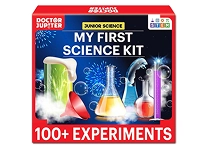
Choose among educational toy types by considering the activity a child enjoys. Building blocks, magnetic construction pieces, and engineering kits invite designing and testing; jigsaw puzzles, memory games, and sorting toys encourage observation and problem-solving. Alphabet, number, and language games can make early concepts tangible, while art and music toys support expression through making, rhythm, and sound. Pretend-play sets, such as kitchens or tool kits, help children create stories and practise everyday routines. Science and nature kits introduce topics through guided activities, with adult support where instructions or small components require it. Brands such as LEGO, Melissa & Doug, and Learning Resources offer examples across construction, imaginative play, and skill-building formats. Compare the play pattern, included pieces, and suggested age before choosing.
- Construction, puzzles, and games
- Creative, pretend, and science activities
- Compare play style and age guidance
Match Toys to Skills, Interests, and Age
A useful way to compare learning toys is to identify the skills they invite children to practise, rather than relying on a broad educational label. Fine-motor activities may involve threading, grasping, or placing pieces; early numeracy toys can introduce counting, sorting, and simple sequences. Storytelling sets encourage vocabulary and imaginative thinking, while cooperative games give players chances to practise communication and turn-taking. For younger children, look closely at age recommendations, component size, and supervision guidance. Older children may enjoy open-ended construction, logic challenges, or more detailed experiments that reward persistence. A well-matched toy should offer an achievable starting point and room to explore, without making play feel like a test. Consider the child's current interests, attention span, and familiarity with the activity when comparing choices.
- Consider skills the activity practises
- Check age guidance and supervision notes
- Choose an engaging level of challenge
Materials, Features, and Digital Compatibility
Materials and construction influence how a toy feels, functions, and fits into a play space. Wooden toys, plastic building components, cardboard puzzles, fabric accessories, and mixed-material kits each have different textures and care needs; review product details for cleaning instructions and included parts. Look for clear instructions, sturdy connections, well-finished edges, and storage solutions suited to the set. Some educational toys incorporate lights, sound, electronic components, or companion apps. For connected products, check device and operating-system compatibility, power requirements, connectivity needs, and whether a screen is necessary for play. Keep small accessories organized and follow the manufacturer's use and care guidance. Ubuy can help shoppers discover international educational toy products and compare product descriptions, formats, and features before deciding which option fits their needs.
- Compare materials and included components
- Review app, device, and power requirements
- Check care guidance and storage needs
Educational Toys for Home, School, and Gifting
Educational toys can support different routines, from quiet individual activities at home to shared play with siblings, classmates, or caregivers. Compact puzzles and card games are convenient for short sessions, while larger building sets or science kits may suit a dedicated play area and longer projects. For group settings, consider how many children can participate, whether the activity encourages cooperation, and how easily pieces can be sorted afterward. A thoughtful gift can reflect a child's interests—animals, vehicles, music, space, or making—while also offering a new challenge. Check the listed contents to understand whether batteries, tools, or extra materials are needed. When browsing Ubuy, compare descriptions and product formats to identify international options that match the intended setting, recipient, and style of play.
- Consider space, group size, and play time
- Choose themes that reflect personal interests
- Review included items before gifting
Select the Right learning educational toys
Start with the child's interests, then narrow the choices by age guidance, desired activity, and available space. Decide whether the priority is open-ended creativity, a particular skill, collaborative play, or a themed experience; this makes comparisons more practical than choosing by packaging claims alone. Check dimensions, piece counts, instructions, material details, and any compatibility or supervision requirements. For electronic toys, confirm what devices or accessories are required and whether the listed features suit the intended play routine. Consider how components will be stored and how the product should be cleaned to help keep play manageable over time. Compare a few suitable options and choose one with clear product information, a comfortable challenge level, and an activity the child is likely to return to. These checks support a confident, informed purchase.
- Begin with interests and intended use
- Verify product details and requirements
- Balance challenge, space, and care